LAST SUNDAY IN OCTOBER
Clocks go back
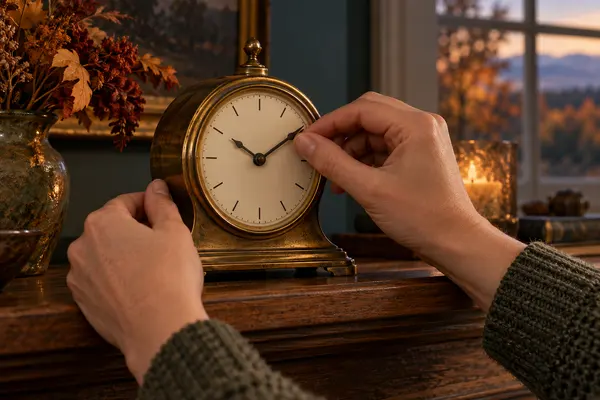
At 2am the clocks return to 1am. You gain an hour and the UK is back on Greenwich Mean Time.
Before Sunday doodleclock
BRITISH SUMMER TIME, EXPLAINED
UK clocks go back one hour at 2am on Sunday 25 October 2026.
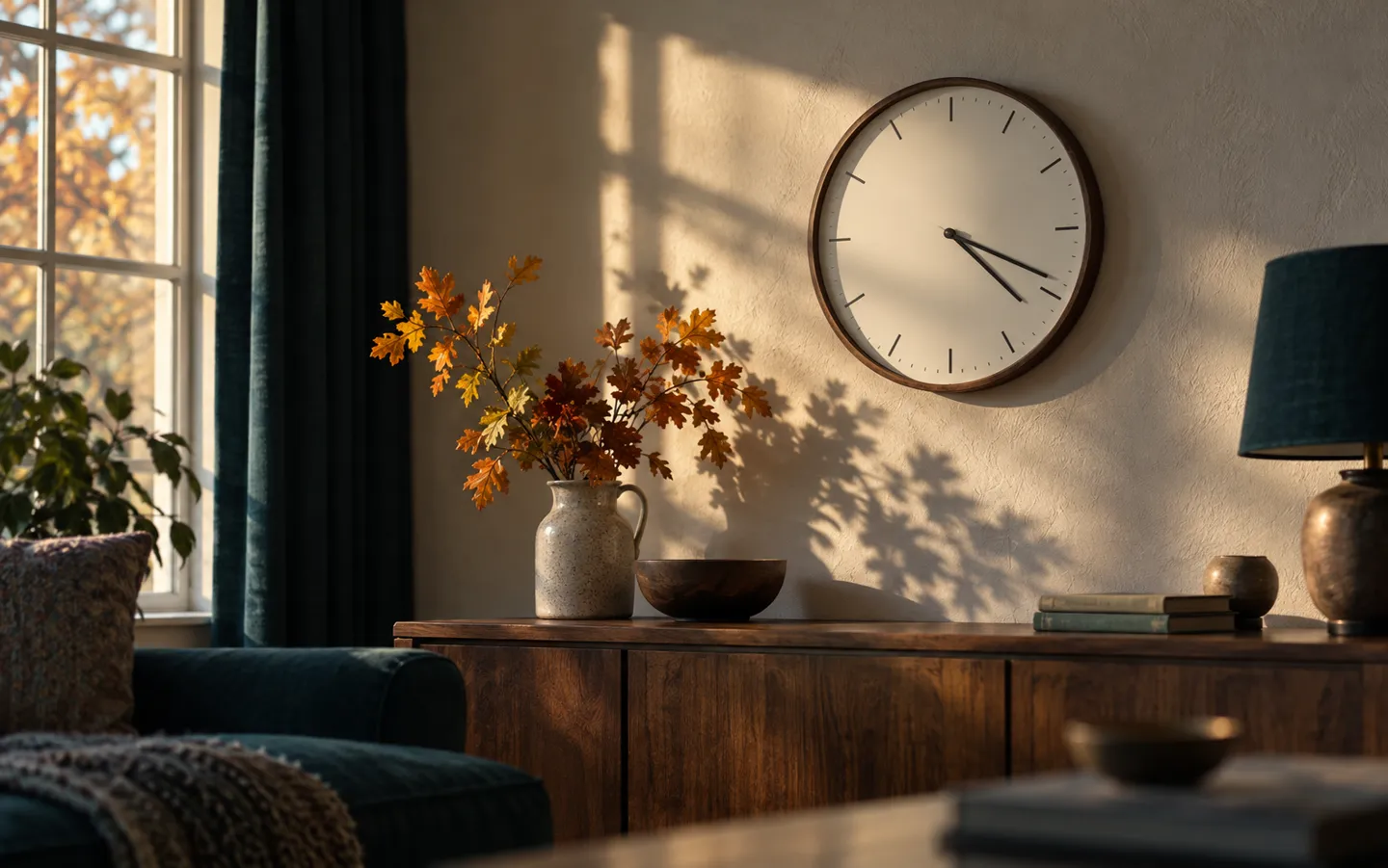
2AM becomes 1am
+6% Fatal crashes, week after the change
Twice a year the whole country moves its clocks, and most of us never ask why. Here is where the idea came from, the experiments Britain has tried, and what researchers have found about the switch, in plain English.
Plain English, with the sources linked.
THE SHORT ANSWER
The UK runs on GMT in winter
and one hour ahead in summer.
LAST SUNDAY IN OCTOBER
At 2am the clocks return to 1am. You gain an hour and the UK is back on Greenwich Mean Time.
Before SundayLAST SUNDAY IN MARCH
At 1am the clocks jump to 2am. You lose an hour and British Summer Time begins.
Where it came fromTHE TRADE-OFF
Changing the clocks does not add daylight. It moves an hour of it between morning and evening.
What research saysA QUICK CLOCK CHECK
Pick a period to see how far UK clocks ran ahead of Greenwich Mean Time. The figures come from Royal Museums Greenwich.
GMT is the time at the prime meridian in Greenwich. A delegate vote chose Greenwich as the world's prime meridian in 1884.
BEFORE SUNDAY
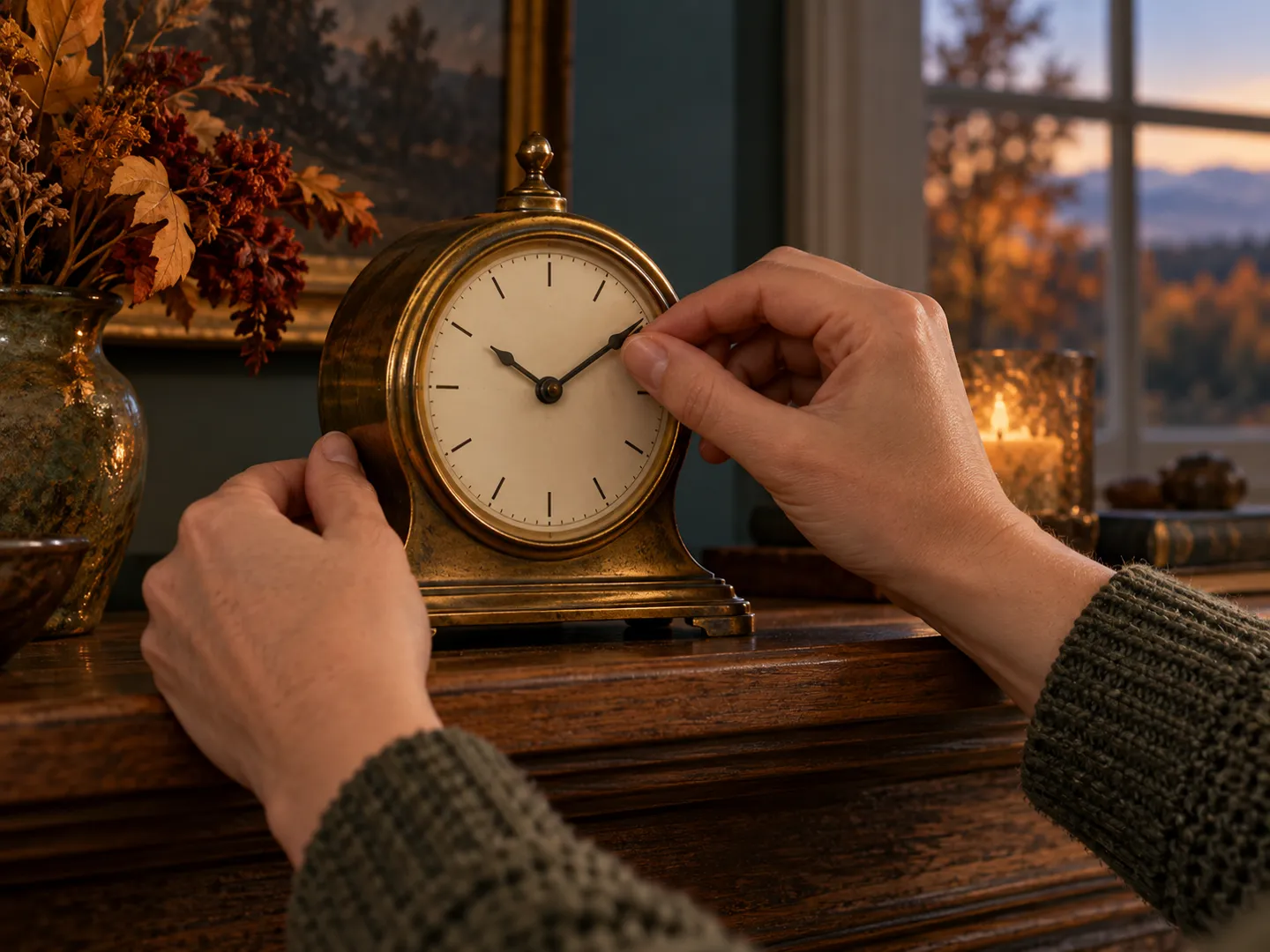
Sunday 25 October 2026, at 2am. The rule is always the last Sunday in October, so next year it is 31 October.
Phones and computers usually update themselves. Ovens, cars, wall clocks and heating timers often need changing by hand.
Sunrise and sunset both move an hour earlier on the clock overnight, so the walk home after work gets darker that week.
On 28 March 2027 the clocks go forward at 1am and you lose an hour. Spring forward, fall back.
WHAT RESEARCHERS HAVE FOUND
Most concern centres on the spring change,
when everyone loses an hour at once.
+6%
Fatal crashes, week after the change
A University of Colorado Boulder study of 732,835 fatal US road accidents from 1996 to 2017 found a 6% rise during the working week after clocks went forward, about 28 extra deaths a year.
SPRING FORWARD · 2020
Standard time
The position of a sleep medicine body
The American Academy of Sleep Medicine says seasonal clock changes should end in favour of permanent standard time, which it argues fits the body clock best.
SLEEP DOCTORS · 2024
Both findings come from the United States, where the debate is loudest. They describe averages across a population, not what will happen to any one person.
CLOCK HISTORY
On 13 October 1884, delegates at the International Meridian Conference in Washington voted 22 to 1 to make Greenwich the world's prime meridian.
In 1907 William Willett published "The Waste of Daylight". His plan moved clocks forward 20 minutes on each of four Sundays in April, 80 minutes in all.
Germany moved its clocks in April 1916. Britain passed the Summer Time Act on 17 May 1916, a year after Willett died, and changed its clocks that Sunday.
During the Second World War, British Double Summer Time put clocks two hours ahead of GMT in summer and one hour ahead in winter.
From 1968 to 1971 the clocks went forward but were not put back. The experiment was discontinued, and the British Summer Time Act 1972 brought back seasonal changes.
QUICK QUESTIONS
Short answers to the questions people ask most.
On Sunday 25 October 2026. At 2am British Summer Time the clocks go back one hour to 1am, and the UK returns to Greenwich Mean Time. In 2027 they go back on 31 October.
In autumn you gain an hour, because 2am becomes 1am again. In spring you lose one: the clocks go forward at 1am on the last Sunday in March, which in 2027 is 28 March.
To move an hour of daylight from summer mornings to summer evenings. The builder William Willett campaigned for it from 1907, and Parliament passed the Summer Time Act in May 1916, a year after he died.
Yes. Between 1968 and 1971 the clocks went forward but were not put back, so the UK stayed an hour ahead of GMT all year. The experiment was discontinued, and in 1972 the British Summer Time Act returned to seasonal changes.
In March 2019 the European Parliament voted to end seasonal clock changes, originally from 2021, but the plan has stalled and clocks across the EU still change. The UK sets its own rules.
Updated
A NAME WORTH THE TIME
doodleclock.com is part of the DoodleSale portfolio. It isn't in an auction right now, but you can ask about leasing it.